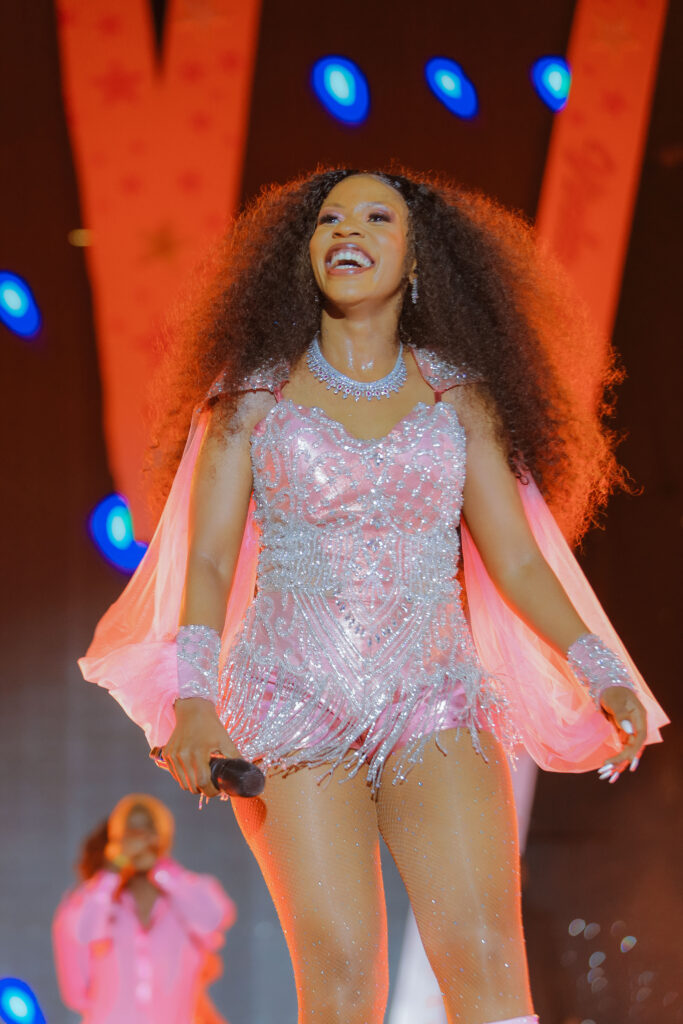


Weeks after Vinka closed out Lugogo Cricket Oval, the outfits are still getting more airtime than some of the hit songs on the radio.
TikTok has stitched, zoomed and slow-motioned every costume change to death.
Whispered in industry corridors is a figure that has fashion insiders and nosy Ugandans alike doing double-takes: over UGX 140 million, allegedly spent on wardrobe alone.
Not on stage, sound, or the much-posted LED wall, but on styling Vinka, her dancers and band for a single night.
That is a number that, if accurate, could make it the most expensive fashion statement in Ugandan concert history.
Vinka arrived on stage in a sparkling purple look for the opening act, rising from beneath the stage with more than ten dancers around her, and kept changing through the night real, confirmed changes, not internet exaggeration.
The looks were built by Ugandan couturier Beryl Qouture, whose name is now doing rounds in fashion WhatsApp groups the way a producer’s name does after a hit song drops.
According to concert coverage, it wasn’t just Vinka in new fabric every twenty minutes; dancers and the band were dressed to match the mood of each section, so the show felt less like one long set and more like chapters, each with its own colour palette and energy.
That’s the part worth sitting with.
For years, wardrobe at Ugandan concerts has lived dangerously close to the bottom of the checklist: artist ready, band ready, dancers ready, and then somebody remembers to call a stylist the week of the show and hope it survives the stage lights.
Whether the UGX 140m figure is exact or not, the direction it points to is real: fashion at Live & Loud was budgeted as part of the production, not squeezed in around it.
Designers, tailors and stylists weren’t asked to “dress Vinka” at the last minute; they were building the visual language of a major show, on a brief and a timeline, months out.
And that money didn’t vanish into the Lugogo night air.
It became real work for real people in an industry that doesn’t always get commissions this size: cutters, seamstresses, sourcing agents, wardrobe assistants running backstage changes, while the crowd outside had no idea how tight the choreography was, either.
Naturally, the comment sections have opinions. Some Ugandans think over UGX 100 million on outfits for a few hours on stage is money that could have gone elsewhere.
Others argue that’s exactly the kind of spend that raises the bar for what a Kampala concert is allowed to look like, and quietly puts local designers on a bigger stage of their own.
Either way, the number has done what tabloid numbers are supposed to do: it’s got Kampala talking about a concert that already happened, weeks later, for a completely different reason than the music.